So, what do you think is the best thing about Winter? Let me save you time, if your answer was anything other than “The return of the Orion Nebula”, then you are wrong, objectively wrong. We may each of us disagree on anything from musical taste to political issues, but how could anyone in their right mind disagree with the fantastic green of this amazing nebula?

24th February 2020, the Orion Nebula making a Spring appearance
So now that everyone even the people at the back are agreed that the Orion Nebula is awesome, I’d like to talk about why I love it so much.
What colours do you think I typically see when out in the backyard with my telescope? “A colour that isn’t grey?” Wrong. “What about a colour that is quite different from grey in most respects?” Also wrong. “What about a colour that could quite easily by mistaken for grey but is actually an unusual type of purple?” I’m not even sure what you just said, but the answer is, the main colour in our universe is grey, grey, grey! Andromeda Galaxy? Grey! The Great Cluster of Hercules! Grey! But surely the….. Whatever you are about to say, I assure you it’s probably grey.
But what about all those photographs from the Hubble Space Telescope, and now the James Webb Telescope? Those photos are so alive with colour! Well, that’s a complicated subject. The oversimplification is that those pictures of our universe are photoshopped. The more complicated answer is that they are a depiction of what we would see if our eyes worked differently from how they do. Perhaps the most scientifically interesting thing in a picture of a nebula is the hydrogren, so in order for astronomers to study that, the hydrogren in the nebula will be brighter than it would appear than if you were to look at it with your own telescope.
And the James Webb telescope has to see in infrared radiation as opposed to visible light, in order to do its job. Galaxies that are incredibly far away from us, further than Hubble can see, are only visible in infrared, not visible light, so if the James Webb didn’t show the further away galaxies in infrared, we wouldn’t see them at all. So, we are seeing what these objects would look like if you had infrared vision, and who knows, maybe if there’s aliens out there with different kinds of eyes, maybe they see all the colours of the rainbow when they bring their telescope out to their backyard. But to us humans with our human eyes, it’s, say it with me now, grey, grey, grey! But not the Orion Nebula. The Orion Nebula is one of the exceptions. It is one of the most beautiful green colours I have ever seen. Here’s another one of my astronomy sketches:

21st January 2021
This is another one done with my charcoal pencils. I find the pastel pencils harder to use, but I should really use them more, because they are very good for bringing out the bright green, such as with this sketch:
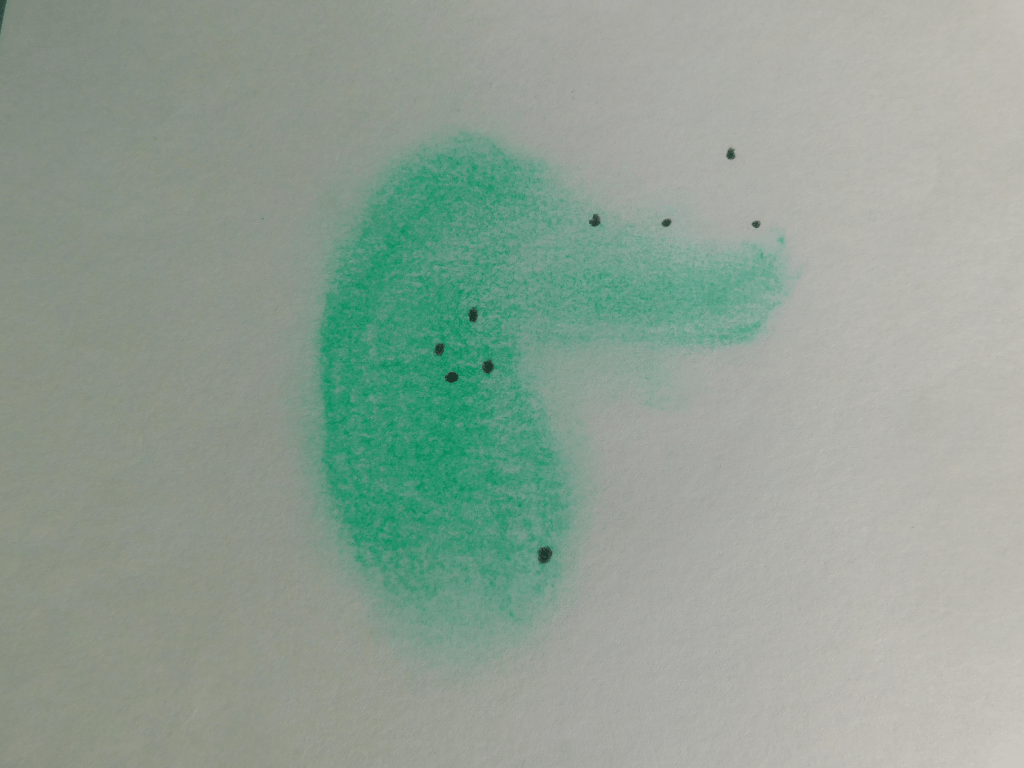
26th February 2019, pastel pencils
So much green! But there’s more. The Orion Nebula isn’t just so beautiful to look at that anyone not brought to tears by its majesty is a cyborg, but it would be a very interesting place to visit too.
The Orion Nebula has red dwarfs (do you hear a certain theme tune in your head that’s been stuck in your head for decades?), brown dwarfs and planets. Our nearest star neighbour, Proxima Centauri, is a red dwarf. Brown dwarfs are absurdly interesting objects that blur the lines between planets and stars. They just couldn’t make it as a star or a planet, so they decided to just do their own thing. And there’s some weird combinations in there. Being from planet Earth, the only thing that makes sense to me is planets that orbit stars, maybe I’m just getting too conversative in my old age. But inside the Orion Nebula, there is a planet, in orbit around a planet. There’s also a brown dwarf in orbit around a brown dwarf, and there’s a planet in orbit around a brown dwarf. So all in all a really interesting place to visit. Here’s an article on the subject of what you would find if you were to visit the Orion Nebula:
I was inspired to write this blogpost because last night was my first time seeing the Orion Nebula this Winter. It is visible in the Spring, goes away for the Summer and then returns in the Winter, so when it comes back around again it’s always a very exciting time. That fantastic, unforgettable green means it will always be one of my favourite astronomical objects. This is the sketch of the Orion Nebula that I did last night:
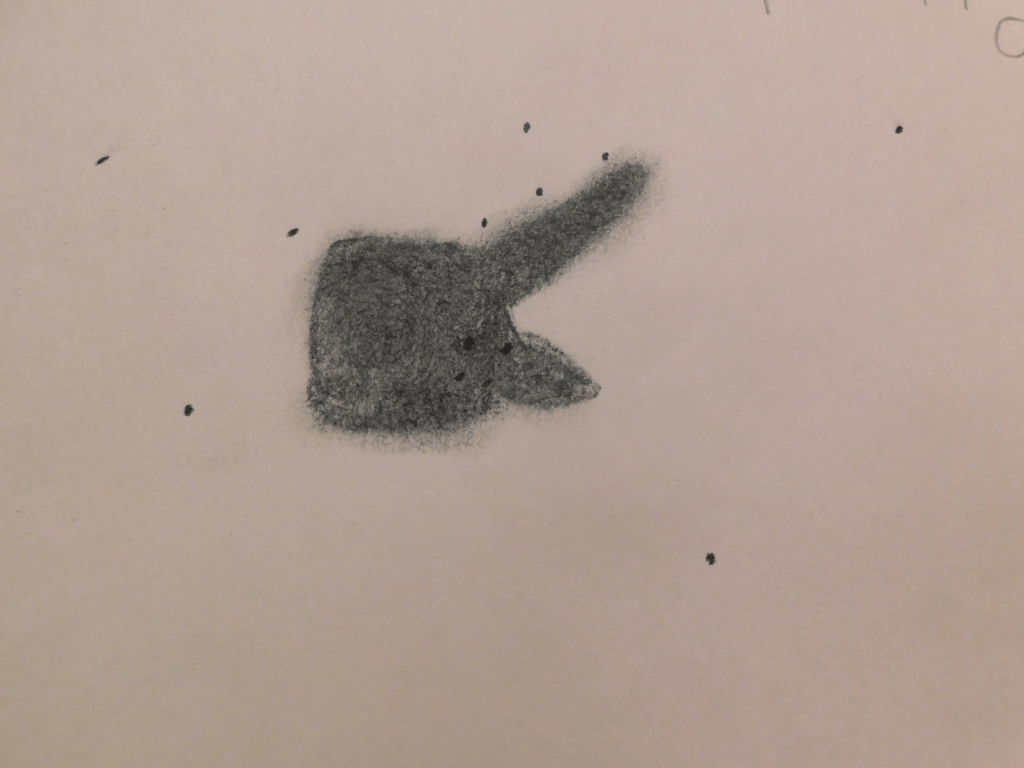
19th November 2022
Times are getting tough for backyard astronomers. Light pollution seems to get worse and worse. My suburban backyard has become equivalent to a city backyard over the past few years, where often times it doesn’t matter if my telescope can see the object I’m looking for or not, because I can’t see the relevant constellation that will guide me to the object. But I think the Orion Nebula should be safe. Its constellation is always very easy to spot even in bad light pollution, and I think it would take for Cork to become the size of New York before the bright, beautiful green of the Orion Nebula stopped shining through.

 Ponderings Of An Autist