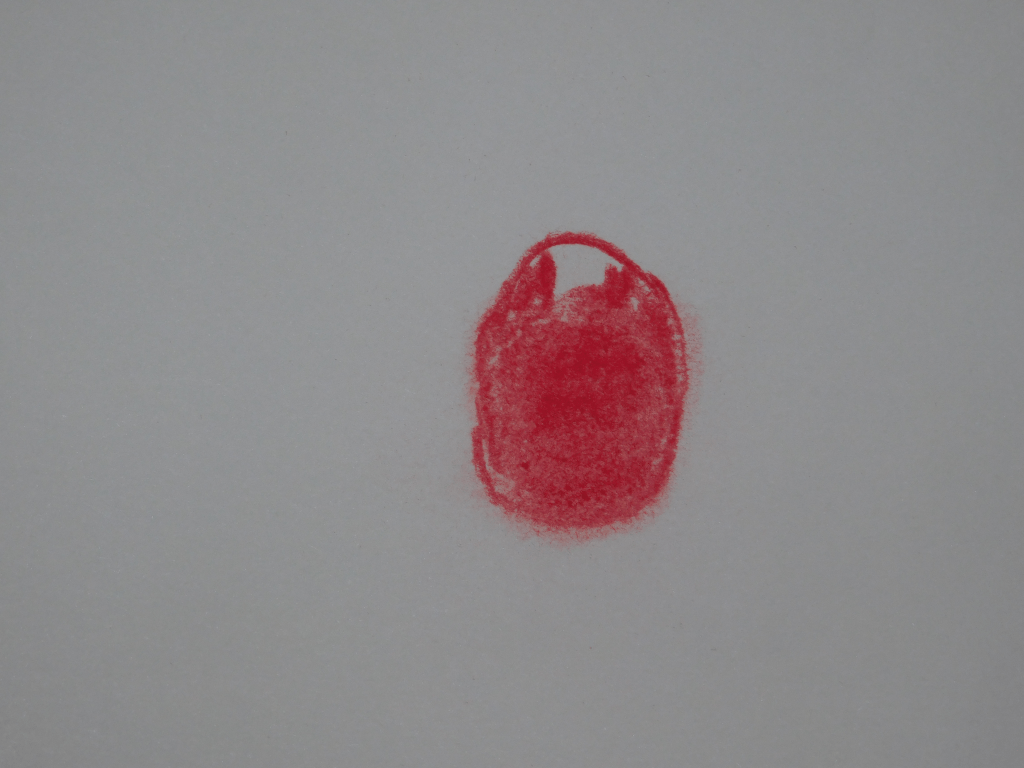
11th August 2020. First attempt at sketching Mars at opposition. At least I captured the ice cap, but I would learn a valuable lesson, pastel pencils are good for sketching many things, but not Mars, they are not good for sketching Mars at all! Although this sketch is kind of adorable it lacks the detail of my later sketches.
2020 was a great year for me, one of the best years of my life in fact. Now, if you’re reading this in the far future, you’re probably thinking, what year was that, was that Brexit, which Marvel film came out that year, or was that the year the United States elected its first cyborg president? You really need to learn your history hypothetical person who lives in the future! But if you’re reading this in the present, you might be thinking, what was so good about 2020 what with Spanish Flu 2.0!
And yeah, it was a terrifying and stressful year for me, but there was something that made it wonderful for me, I will never forget 2020 as a great year for astronomy, because I saw the planet Mars in amazing detail, and that was just one of the awesome astronomical things I saw that year, I will talk about it further in later posts. I have seen every planet with the exception of Mercury through my telescope, but what was special about seeing Mars in 2020 was that, if I was to see Earth in equivalent detail, I would probably be able to see the icecaps, and that Earth has an ocean and continents. I was seeing the fine details of another world.

14th of August. I must have lost confidence in my ability to sketch with coloured pencils after the last one, it’s the only reason I can think of that I decided to sketch this in grey. I captured more detail in general, but I don’t understand how I screwed up the ice cap here, the ice cap is the same colour as the page and involves not drawing!
During 2020, Mars was at opposition. What that meant is that Earth, the Sun and Mars formed a straight line, with the Earth in the middle. This meant Mars was closer to Earth than usual. And funnily enough, when it reached full opposition was October 13th, my birthday! I didn’t actually see it that night due to cloud, but 2020 was a weird, weird year, so good and so awful!
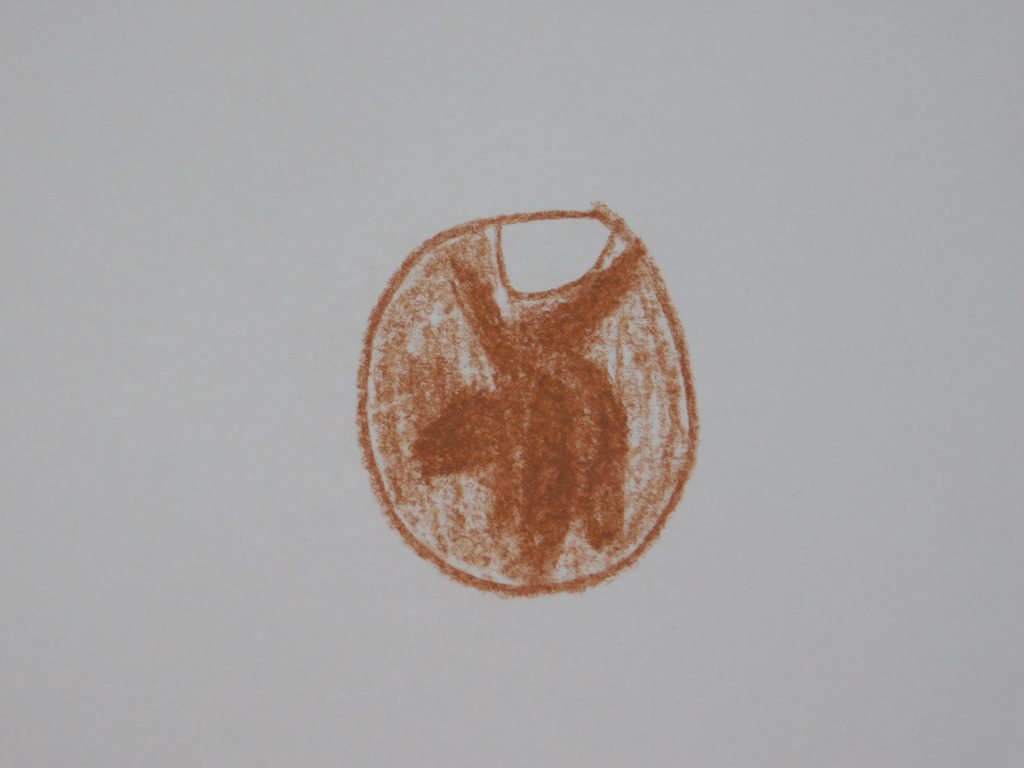
18th of August. Now I think I finally have something to write home about! While the pastel pencils weren’t the best, the charcoal pencils really did the trick, and from this point on all of my Mars sketches would be with the charcoal pencils. I think on this third attempt there is actually detail I can actually talk about. The white patch at the top is the southern ice cap. The dark red parts are the basalt rock, from volcanoes that happened millions of years ago or more, and the bright red parts are the dust that covers much of Mars.
So what did I see on Mars? I got out my trusty six inch dobsonian telescope, and the detail that jumped out at me straight away was the southern ice cap. To put this into perspective, I have never seen Antarctica, seen pictures of it sure, but I have never actually seen Antarctica with my eyes, and yet I have seen the southern ice cap of Mars.
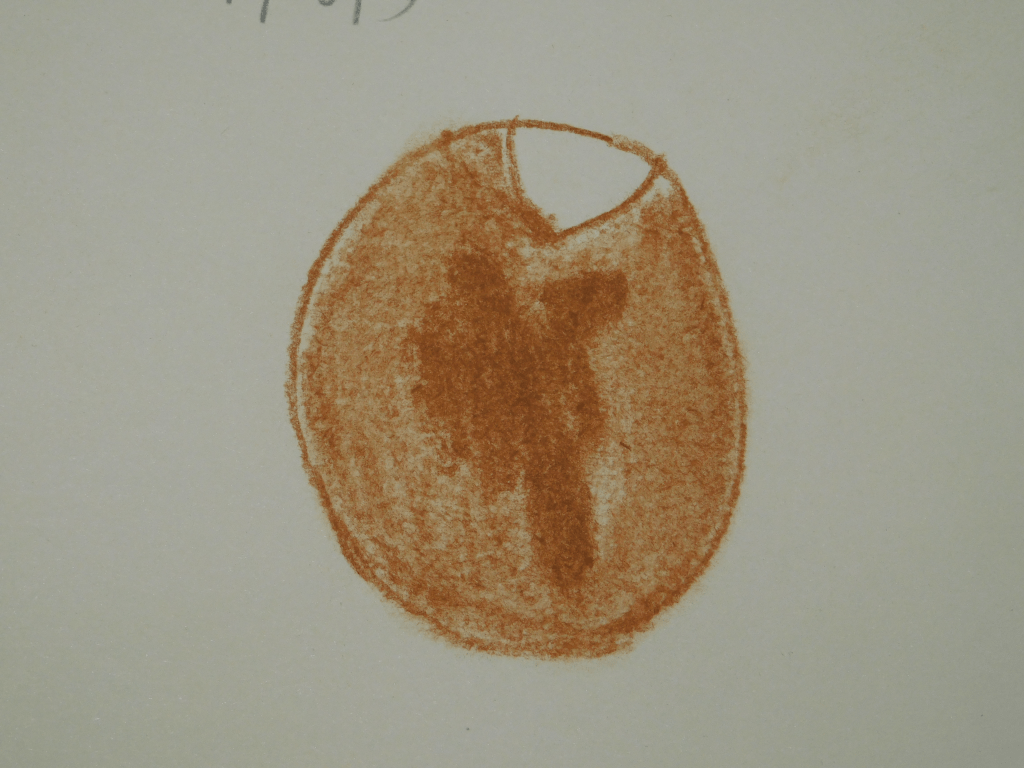
26th August. I think an improvement over the last one, there are less weird white patches where I neglected to colour it in properly.
I could see a lot of dark red areas on Mars. What I was seeing was areas of basalt rock, or volcanic rock, formed millions of years ago or more when Mars still had volcanoes. I was seeing an important part of Mars’s geological history. Not bad for a six inch telescope! And I saw a lot of bright red areas too. What I was seeing was the bright red dust that covers much of the planet. But this dust has been troublesome in the past, troublesome indeed! Normally when you look at Mars through a telescope you see no details at all, just the red colour. But in 2018, Mars went into opposition, so the astronomy community became excited that they were about to see Mars in amazing detail-. No, a massive dust storm covered the planet. You could see absolutely no detail on Mars that year, unless your eyes were so unbelievably keen that you can tell different clouds of dust apart!
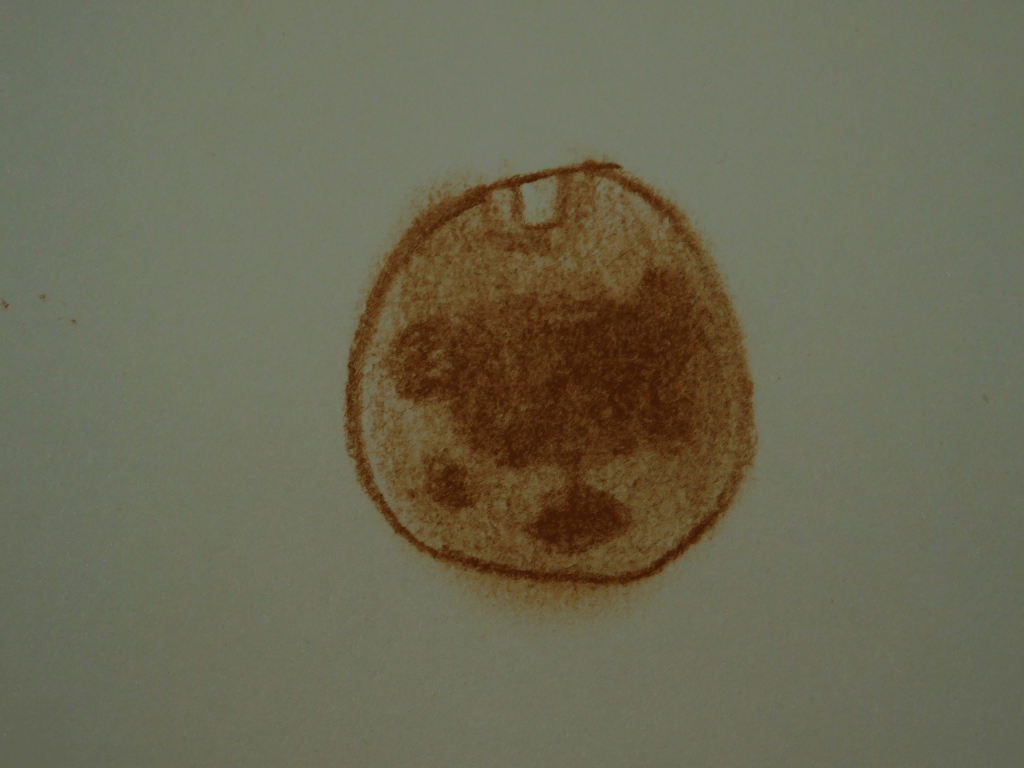
17th September. Wish I hadn’t got all those weird smudges, it looks like the atmosphere of Mars is on fire. To be clear, this was an error on my part, a supervillian did not torch the atmosphere of Mars on 17th September!
From August until December I did many sketches of Mars, but by December as the opposition started to end Mars started to lose all detail, first the ice cap disappeared then the basalt rock. And Mars once more became the vague orange light in the sky that it usually is.
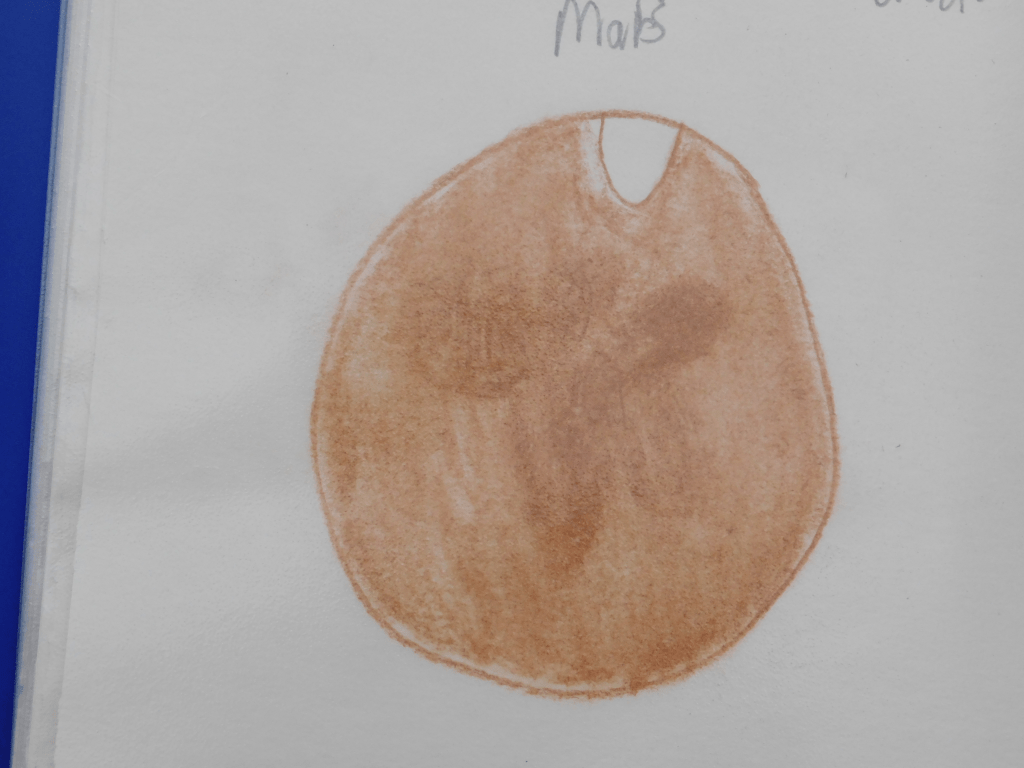
19th September. This is a much bigger sketch, I was experimenting with the idea that a bigger drawing would yield more detail. As you can see, it did not!
But for much of 2020 Mars was a delight to see even as a naked eye object. Normally Venus is what dominates the sky, but for a lot of 2020, it was Mars, so you could look up into the sky and see an absolutely magnificent orange light.

22nd of October. Still a lot of detail, but the glory days would soon be done.
I often find it bizarre to think that I haven’t seen any continent except Europe, and not much of that. But I’ve seen another world. Seeing Antarctica with my own eyes would cost thousands, and that would just be to get close enough to see it let alone landing, seeing the southern ice cap only cost three hundred and something euros (the price of the telescope.) I’ve never seen the Grand Canyon, or the Australian outback, or the bizarre landscape of Cappadocia, but I’ve seen the volcanic landscapes of Mars.
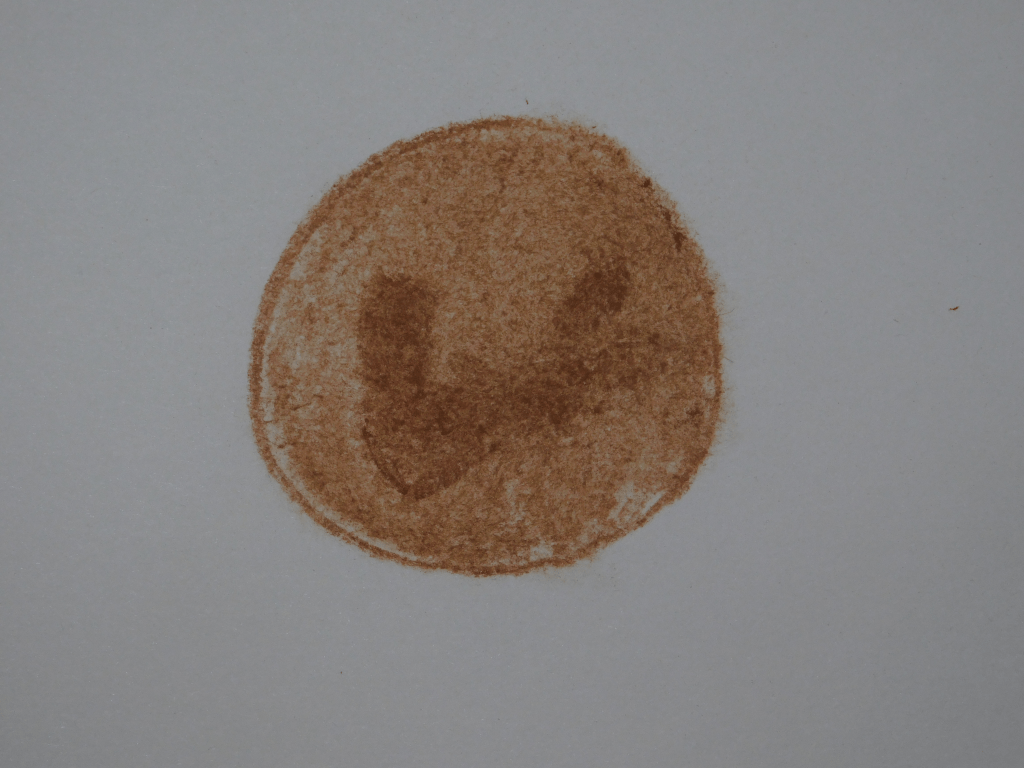
8th December. While I’m still capturing the basalt rock, the opposition at this point is well and truly almost over. I didn’t capture the ice cap at all here.
And while I was disappointed that the dust storm ruined my chances of seeing Mars in 2018, I think I’m glad I had to wait until 2020. Because during that scary year, when I really, really needed something to keep me sane, to keep my anxiety and stress at the situation under control, that’s when I got to see the most unforgettable view of Mars of my life.

 Ponderings Of An Autist